
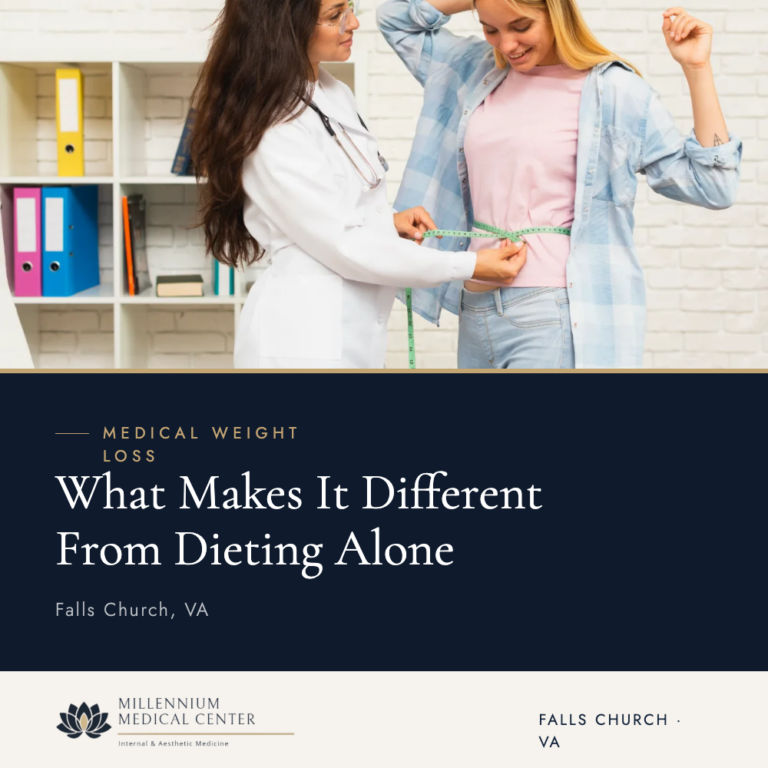
If you have tried dieting or exercise changes on your own with results that did not stick, that is a common experience, not a personal failing. A weight loss program Falls Church VA patients can visit in person, with actual medical supervision, works differently, and MMC serves patients from Falls Church and across the wider DMV area (DC, Maryland, and Virginia). Here is what that difference really involves before deciding if it is right for you.
Why Dieting Alone Often Falls Short
Weight management involves more than willpower. Metabolism, hormones, sleep, stress, and underlying health conditions like ones addressed through chronic condition management all play a role, and generic diet advice does not account for any of these individual factors. This is part of why the same diet can work well for one person and barely move the needle for another, a gap the Obesity Medicine Association’s own clinical approach is built around addressing.
What Medical Supervision Adds
A medically supervised weight loss program starts with an actual health assessment, looking at factors that might be affecting your weight beyond diet and exercise alone, like thyroid function or other underlying conditions, some of which overlap with what’s evaluated in a hair loss treatment assessment too, since hormones affect both. At MMC in Falls Church, this allows a plan built around your specific situation, with ongoing monitoring and adjustments, rather than a generic program applied the same way to everyone.
What an Initial Assessment Looks Like
An initial assessment typically includes a review of your health history, relevant lab work, and a conversation about your goals and past attempts at weight management. This gives your provider a fuller picture than a diet app or generic plan could, and it is the foundation for whatever specific approach is recommended for you, similar to the kind of assessment used in internal medicine for other ongoing conditions.
Setting Realistic Expectations
No program can promise a specific amount of weight loss or a fixed timeline, since results depend on many individual factors, including adherence, underlying health conditions, and how your body responds, consistent with the CDC’s own guidance that gradual, individualized weight loss tends to be more sustainable. A good program should be honest about this rather than promising outcomes it cannot control.
Frequently Asked Questions
Q: How much weight can I expect to lose with a medical weight loss program?
A: This varies significantly by individual and cannot be predicted in general terms. Your provider can discuss realistic expectations based on your specific health assessment.
Q: Is a medical weight loss program covered by insurance?
A: This depends entirely on your specific insurance plan. Check directly with your provider for details on coverage.
Q: Do I need to have a specific health condition to qualify for a medical weight loss program?
A: Not necessarily. Many people pursue medically supervised weight loss without a diagnosed condition. An initial assessment will help determine what approach fits your situation.
Ready to talk through a medical weight loss DMV option built around your own health picture, not a generic plan, the same physician-led philosophy behind MMC’s aesthetic physician services? Book a consultation with our weight loss program Falls Church team at MMC in Falls Church, Virginia.