
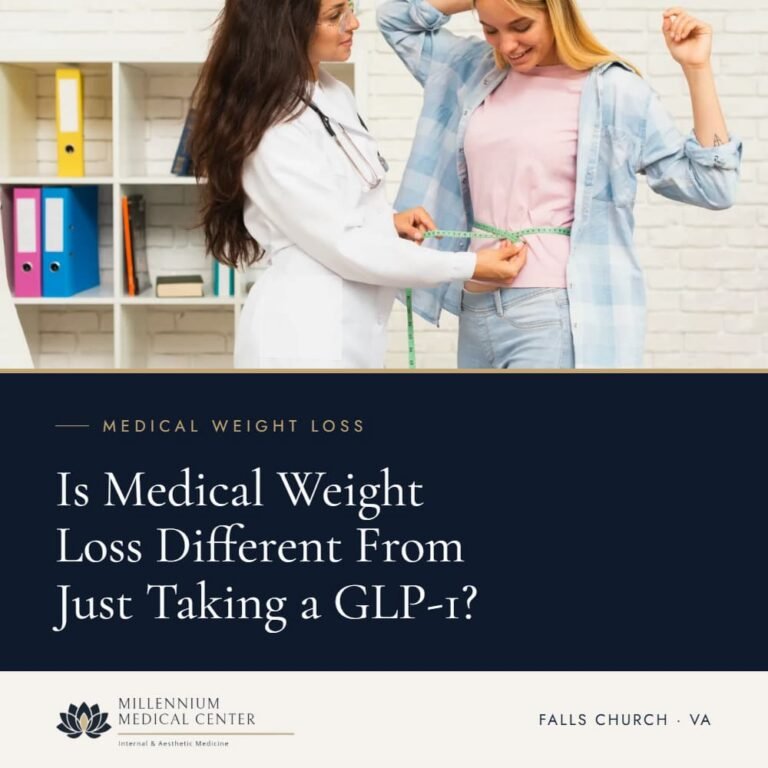
People researching weight management often encounter two terms that sound interchangeable: medical weight loss and GLP-1 treatment. They are related, but they do not describe exactly the same thing.
The main difference between medical weight loss vs GLP-1 is scope. Medical weight loss is a broader, clinician-supervised approach that may include a health evaluation, nutrition and activity guidance, management of underlying conditions, behavioral support, and medication when appropriate. GLP-1 medications are one potential tool that may be included in that plan.
At Millennium Medical Center and Spa, patients can learn more about Weight & Metabolic Health (GLP-1) as part of a physician-led approach to weight management.
What Does Medical Weight Loss Involve?
Medical weight management starts by looking beyond the number on the scale. Weight can be influenced by eating patterns, activity, sleep, medications, metabolic health, medical conditions, and other individual factors.
A medical evaluation may include discussion of:
- Weight history
- Previous weight-loss attempts
- Current medications
- Blood pressure
- Blood glucose
- Cholesterol
- Thyroid concerns when clinically indicated
- Sleep
- Nutrition
- Physical activity
- Weight-related health conditions
The goal is to identify factors that may affect treatment planning rather than automatically prescribing the same program to every patient.
Some people may benefit primarily from nutrition and lifestyle changes. Others may be candidates for prescription medication alongside those changes. Treatment decisions should be based on clinical evaluation rather than a medication trend or online recommendation.
What Are GLP-1 Medications?
GLP-1 medications refer to medicines that act on pathways involved in appetite, digestion, blood glucose regulation, and feelings of fullness. Certain medications in this broader category are approved in the United States for chronic weight management in appropriately selected patients.
Semaglutide is one example. Tirzepatide acts on both GIP and GLP-1 receptors and is also used for certain approved indications.
These medicines are prescriptions, not general wellness products. Their appropriate use depends on the specific drug, approved indication, medical history, current medications, potential contraindications, and individual risk-benefit discussion.
They can also cause side effects. Gastrointestinal symptoms such as nausea, vomiting, diarrhea, constipation, or abdominal discomfort can occur, particularly while doses are being adjusted.
Is GLP-1 Therapy the Same as a Complete Weight Loss Program?
No. GLP-1 therapy may be one component of a broader treatment strategy.
Medication does not replace the value of appropriate nutrition, activity, sleep, follow-up, and management of other health conditions. Weight management may also change over time as a patient’s health, response to treatment, and goals change.
A physician-supervised program may include:
- Health and medication review
- Appropriate laboratory testing
- Nutrition planning
- Physical activity guidance
- Prescription treatment when indicated
- Side-effect monitoring
- Dose adjustment
- Ongoing assessment
- Long-term weight-management planning
That broader support is one of the key differences when comparing medication alone with a medical weight-management program.
Who May Be Considered for Prescription Weight Management?
Eligibility for a prescription weight loss treatment depends on the medication and the patient’s health profile.
Clinicians may review body mass index, weight-related health conditions, prior efforts, medical history, medications, and contraindications before prescribing.
A higher body weight alone does not mean a particular medication is automatically appropriate.
Conditions and factors that may affect medication selection include:
- Diabetes
- High blood pressure
- Cardiovascular disease
- Kidney or liver conditions
- Gastrointestinal disease
- Pregnancy or plans for pregnancy
- Certain endocrine conditions
- Personal or family medical history
- Current prescription medications
Because warnings and contraindications vary among products, treatment should be discussed with a licensed medical professional familiar with the patient’s health history.
What Are the Benefits and Limitations of Medical Weight Management?
One advantage of clinician-supervised obesity treatment is that weight is addressed alongside overall health.
For example, a physician may identify that blood pressure, glucose control, sleep, medications, or another health concern also needs attention. This can influence which treatment options are reasonable.
Medical management still has limitations. No medication guarantees a specific amount of weight loss. People respond differently, side effects may limit treatment, insurance coverage varies, and weight regain may occur after treatment changes or discontinuation.
Long-term planning matters because obesity is often managed as a chronic health condition rather than a short-term project.
How Do You Decide Which Approach Is Appropriate?
Start with a medical evaluation rather than choosing a prescription based on advertising or someone else’s experience.
Questions worth discussing include:
- What is contributing to my weight?
- Are there medical factors that should be evaluated?
- Do I meet the criteria for prescription treatment?
- What benefits can reasonably be expected?
- What side effects and warnings apply?
- How will treatment be monitored?
- What happens if the medication does not work well for me?
- What is the long-term strategy?
The answer may involve medication, lifestyle changes, management of another condition, or a combination of approaches.
Frequently Asked Questions
Is Medical Weight Loss Just Taking GLP-1 Medication?
No. Medical weight loss is a broader approach that may include medical evaluation, nutrition, physical activity, behavioral changes, monitoring, and prescription medication when appropriate. A GLP-1 medication is one possible treatment tool rather than the entire program.
Are GLP-1 Medications Appropriate for Everyone Who Wants to Lose Weight?
No. Prescription medications have indications, contraindications, warnings, side effects, and other factors that must be reviewed. A clinician should determine whether a particular medication is appropriate based on the person’s medical history and treatment goals.
Do You Have to Stay on GLP-1 Medication Forever?
Treatment length varies. Some people may use weight-management medication long term, while others may change therapy because of side effects, health changes, response, access, or other factors. Medication should not be stopped or changed without discussing the plan with the prescribing clinician.
Can You Regain Weight After Stopping Treatment?
Weight regain can occur after stopping weight-management medication. This is one reason long-term nutrition, activity, behavioral strategies, and medical follow-up remain important even when medication is part of treatment.
Take the Next Step
If you are comparing medical weight management with GLP-1 medication, an individualized medical evaluation can help clarify which options may be appropriate. Learn more about Weight & Metabolic Health (GLP-1) at Millennium Medical Center and Spa.
This article provides general educational information and is not an individualized diagnosis, prescription, or treatment recommendation.