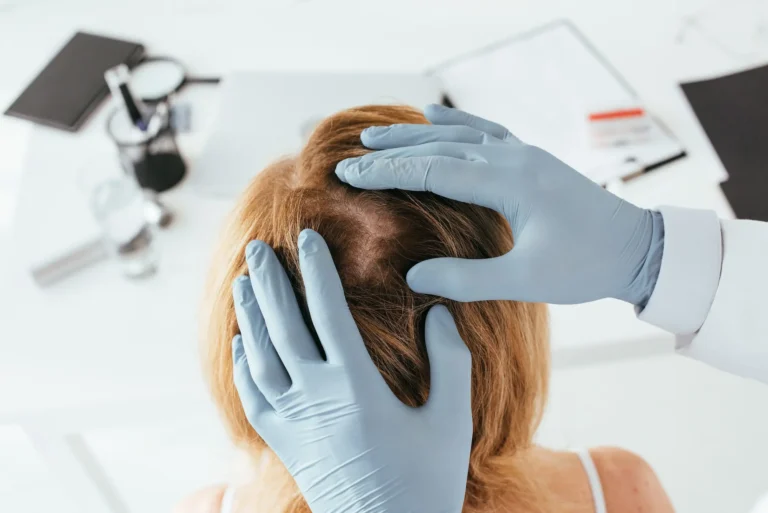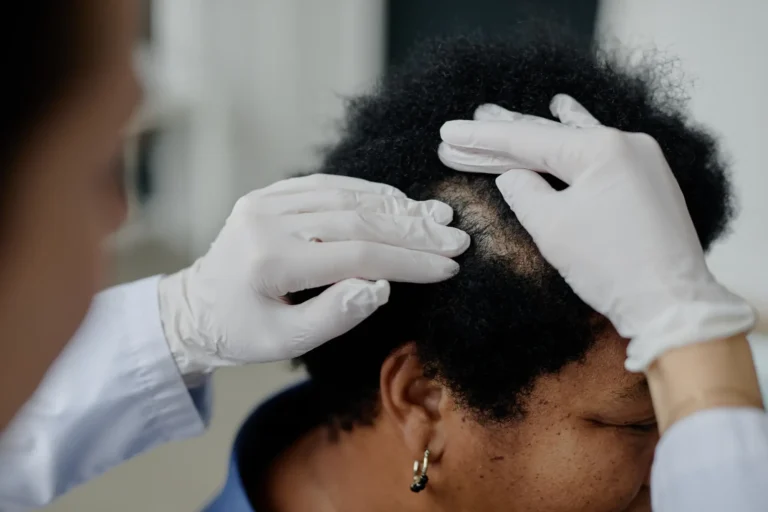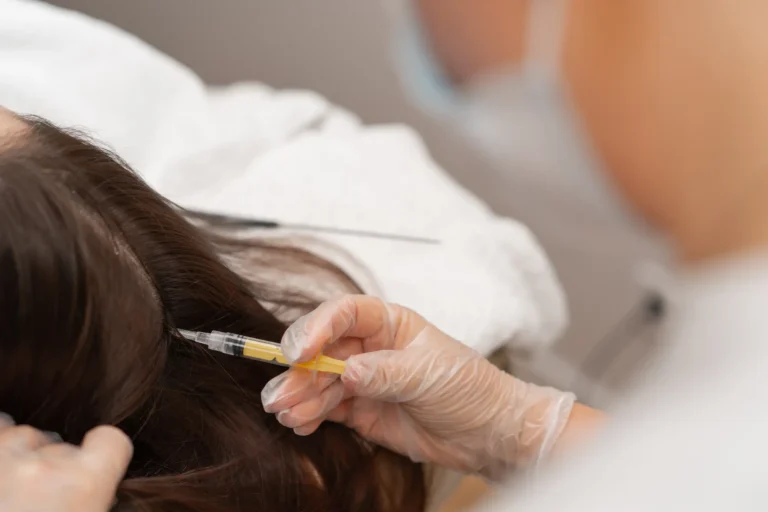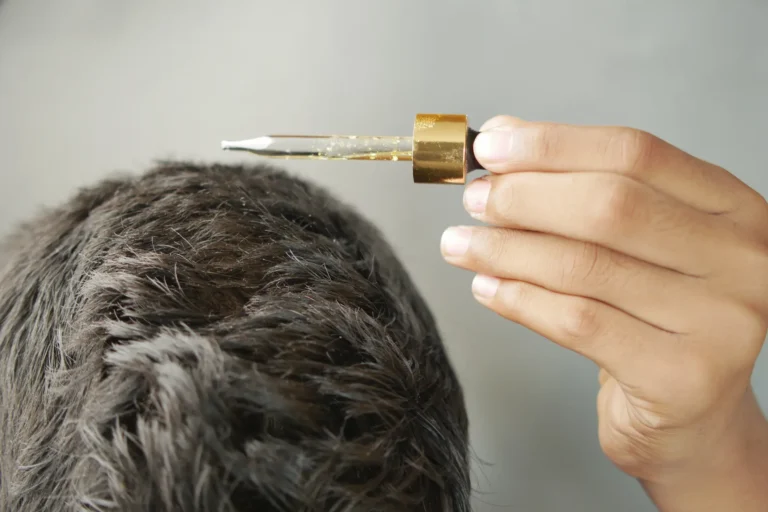
Most hair loss clinics evaluate the scalp. Dr. Shayma evaluates the patient. Hormonal contributors to hair loss — thyroid dysfunction, declining estrogen, PCOS-related androgen excess, postpartum hormonal shifts, and elevated cortisol — are among the most common and most treatable drivers of hair thinning in women, and they are routinely missed when evaluation stops at the hair follicle.
Hair follicles are hormone-sensitive — estrogen, androgens, thyroid hormones, cortisol, and prolactin all exert direct effects on follicular cycling, hair shaft diameter, and scalp health. Standard hair loss evaluation rarely goes beyond a TSH and a CBC — leaving the majority of hormonal contributors unidentified and untreated. Dr. Shayma evaluates the full hormonal picture and treats both the hormonal root cause and the follicular consequence simultaneously.
Hormone-related hair loss evaluation at Millennium means a physician who understands both hormonal medicine and scalp health evaluates what is actually driving your hair thinning — then treats the hormonal root cause and the follicular consequence simultaneously. Most hair clinics can only address the latter.
Estrogen prolongs the anagen (growth) phase of the hair cycle and partially antagonizes the effect of androgens on follicular miniaturization. As estrogen declines during perimenopause — often years before the final menstrual period — women notice accelerated hair thinning, reduced hair density, and a widening part. This is frequently dismissed as “normal aging” when it is actually a hormonally driven, often treatable process.
Dr. Shayma evaluates the full hormonal picture — not just TSH — before attributing hair loss to any single cause.
01
Hypothyroidism, Hashimoto’s thyroiditis, and hyperthyroidism all cause hair loss — evaluated with TSH, free T3, free T4, and TPO antibodies. Treatment significantly improves hair loss when thyroid is the primary or contributing driver. PCOS-driven androgen excess causes androgenetic alopecia pattern in women alongside irregular cycles, acne, and hirsutism — evaluated with testosterone, DHEA-S, SHBG, and insulin.
02
Declining estrogen during the menopausal transition removes anagen-prolonging, anti-androgenic protection — accelerating hair miniaturization. Evaluated with estradiol, FSH, LH, and progesterone. The dramatic drop in estrogen and progesterone following delivery triggers synchronized telogen effluvium in most women, peaking at 3–6 months postpartum — often complicated by iron deficiency and thyroid dysfunction.
03
Chronic stress-elevated cortisol shortens the anagen phase and promotes early telogen entry — producing diffuse shedding that becomes chronic when stress is sustained. Evaluated with morning cortisol and DHEA-S. Hyperprolactinemia suppresses FSH and LH, reducing sex hormones and contributing to diffuse hair thinning.
04
The dramatic drop in estrogen and progesterone following delivery triggers synchronized telogen effluvium in most women, peaking at 3–6 months postpartum. Usually self-resolving, but iron deficiency, thyroid dysfunction, and breastfeeding-related nutritional depletion can prolong and worsen the shedding.
Hormone-Related Hair Loss Evaluation at Millennium involves standard blood draws and a physician consultation. All treatment recommendations follow a physician evaluation of the full clinical picture.
Hormone-Related Hair Loss Evaluation at Millennium involves standard blood draws and a physician consultation. All treatment recommendations follow a physician evaluation of the full clinical picture.
A detailed history covering hair loss timeline, menstrual cycle history, pregnancy and postpartum course, thyroid symptoms, weight changes, and mood. A comprehensive hormone and nutrient blood draw. A results review appointment with Dr. Shayma explaining every finding and your personalized treatment plan.
Hormone-related hair loss evaluation at Millennium is physician-led, laboratory-informed, and treatment-oriented. The evaluation is not a consultation that ends with a lab referral — Dr. Shayma manages both the hormonal and the scalp components herself.
Diffuse thinning, a widening part, or reduced ponytail circumference in women with no family history of hair loss suggests a hormonal or nutritional driver that merits investigation.
Diffuse thinning, a widening part, or reduced ponytail circumference in women with no family history of hair loss suggests a hormonal or nutritional driver that merits investigation.
Fatigue, irregular periods, night sweats, weight gain, acne, or hirsutism alongside hair thinning suggest a specific hormonal pattern that Dr. Shayma can identify and treat.
Most hair clinics can offer PRP and topicals — but cannot diagnose or treat thyroid disease, PCOS, perimenopause, or elevated cortisol. Dr. Shayma’s internal medicine background means she can address the hormonal root cause and the scalp simultaneously.
Dr. Shayma takes a detailed history covering hair loss timeline, menstrual cycle history, pregnancy and postpartum course, symptoms of thyroid dysfunction, weight changes, acne, hirsutism, libido, sleep quality, and mood — all providing clinical context for the hormone panel. 20–30 min.
01
Dr. Shayma takes a detailed history covering hair loss timeline, menstrual cycle history, pregnancy and postpartum course, symptoms of thyroid dysfunction, weight changes, acne, hirsutism, libido, sleep quality, and mood — all providing clinical context for the hormone panel. 20–30 min.
02
Blood drawn for a comprehensive panel: TSH, free T3, free T4, TPO Ab, total and free testosterone, DHEA-S, SHBG, estradiol, FSH, LH, progesterone (cycle-timed when relevant), prolactin, cortisol, ferritin, vitamin D, zinc, and CBC. Results interpreted against functional targets.
03
Dr. Shayma reviews every result in the context of your clinical presentation and designs an integrated treatment plan: hormonal management (thyroid medication, anti-androgens, hormone therapy as indicated), nutritional repletion, and scalp-level treatment (PRP, Scalp Solution).
04
Hormonal treatment and scalp treatments run concurrently — addressing the root cause and the scalp simultaneously. Follow-up labs at 6–12 weeks confirm hormonal targets. Trichoscopy at 6 months documents follicular response. Protocol adjusted based on data, not impression.
The four pillars of medical credibility — and why physician-led Hormone-Related Hair Loss Evaluation produces better outcomes than delegated or unmonitored alternatives.
Dr. Shayma has evaluated and managed hormonal hair loss across the full spectrum of presentations — perimenopausal women experiencing accelerated thinning, PCOS patients with androgen-driven alopecia, postpartum patients with prolonged shedding, and women whose hair loss was the presenting sign of undiagnosed autoimmune thyroid disease.
The intersection of internal medicine, endocrinology, and scalp medicine that hormonal hair loss evaluation requires is precisely where Dr. Shayma’s board-certified internist training provides the most value. She can diagnose and treat the hormonal condition — not just identify that one exists.
Hormone-related hair loss evaluation at Millennium is physician-led, laboratory-informed, and treatment-oriented. Dr. Shayma manages the hormonal and the scalp components herself, providing a single point of coordinated care.
Dr. Shayma provides honest assessments: addressing thyroid dysfunction or estrogen decline will reduce the hormonal driver of hair loss, but follicular miniaturization that has already occurred requires concurrent scalp-level treatment to reverse. Patients receive accurate timelines and realistic expectations.
The most common questions patients ask about hormone-related hair loss evaluation at Millennium Medical Center.
Can hormones cause hair loss?
Yes — hormonal imbalance is among the most common causes of hair loss in women. Thyroid dysfunction, declining estrogen during perimenopause and menopause, elevated androgens from PCOS, postpartum hormonal shifts, and elevated prolactin or cortisol can all contribute to significant hair thinning.
Yes. Estrogen prolongs the anagen growth phase of the hair cycle and partially counteracts the effects of androgens on follicular miniaturization. As estrogen levels decline during perimenopause and menopause, this protective effect is lost, and many women experience accelerated hair thinning.
Yes. PCOS is the most common cause of androgen excess in premenopausal women — and elevated testosterone and DHEA-S drive androgenetic alopecia pattern hair loss in women with PCOS. Dr. Shayma evaluates and manages the full hormonal picture of PCOS, including anti-androgen therapy for hair loss.
In many cases, yes — partially or significantly. Thyroid-related hair loss is one of the most reversible causes when treatment achieves optimal thyroid function. However, the hair loss response often lags 3–6 months behind hormonal correction. Concurrent scalp treatment (PRP, topicals) accelerates the response.
Most patients see meaningful shedding reduction within 3–4 months of achieving optimal hormonal balance, with visible density improvement over 6–12 months. Concurrent scalp treatments (PRP, Scalp Solution) accelerate this timeline by providing direct follicular stimulation while hormonal management takes effect.
Begin Your Journey
Whether you are coming in for internal medicine, aesthetic care, or to explore a physician-led treatment plan built around your health — Millennium Medical Center is ready to see you. Book your consultation today and experience care that starts from within.