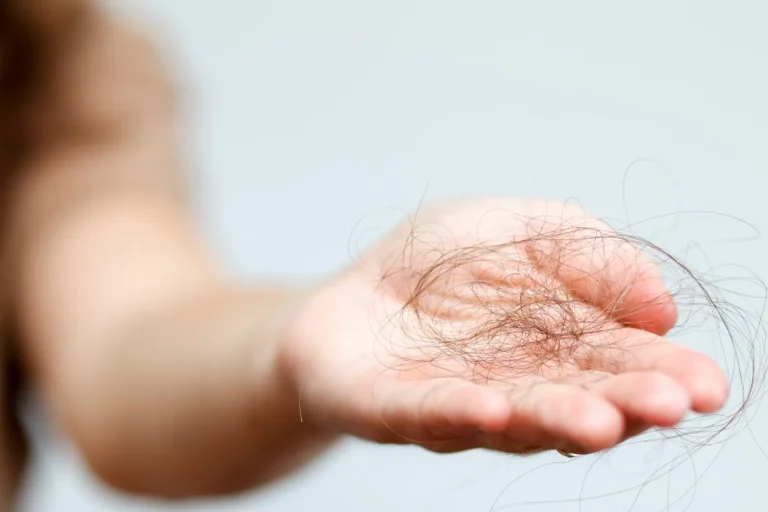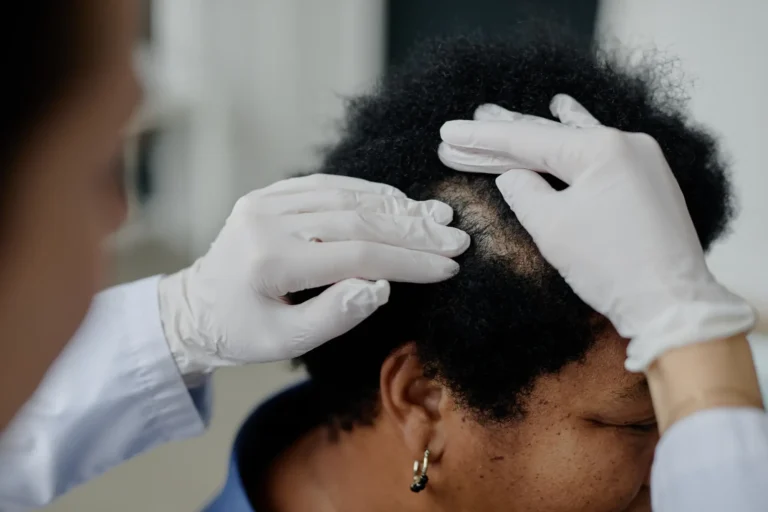
Hair loss is one of the most commonly reported side effects of GLP-1 receptor agonists — semaglutide (Ozempic, Wegovy) and tirzepatide (Mounjaro, Zepbound). At Millennium Medical Center, Dr. Shayma, MD manages GLP-1-associated hair loss as a preventable and treatable complication — addressing the specific drivers and allowing patients to continue their weight loss journey without sacrificing their hair.
Hair loss on GLP-1 medications is overwhelmingly driven by telogen effluvium — the body registers rapid weight loss as a metabolic stressor, and follicles throughout the scalp shift from the active growth (anagen) phase into the resting (telogen) phase. Three concurrent factors amplify the shedding: protein deficiency (hair is 95% keratin — a protein), micronutrient depletion (reduced food volume decreases iron, zinc, biotin, and hair-supportive nutrients), and in some patients, hormonal changes from significant body weight loss.
Ozempic and Wegovy hair loss is caused by the rapid weight loss, not the drug itself. It’s telogen effluvium — a stress-triggered shedding that is largely reversible. The fix involves proactive protein and nutritional optimization, scalp PRP to accelerate follicular recovery, and physician management that allows patients to continue GLP-1 therapy without sacrificing their hair.
GLP-1-associated hair loss sits at the intersection of weight management medicine and scalp health — requiring expertise in both. Dr. Shayma prescribes and manages GLP-1 medications and can adjust dose titration when appropriate while simultaneously managing the hair loss through scalp PRP, nutritional optimization, and the Scalp Solution protocol.
Dr. Shayma manages GLP-1-associated hair loss from a uniquely integrated position — as both the GLP-1 prescriber and the scalp health specialist.
01
Complete nutritional workup: ferritin, iron, zinc, biotin, vitamin D, B12, and protein/albumin status. Targeted repletion prescribed based on results — not a general hair supplement. Protein intake guidance specific to GLP-1 patients (0.7–1g per pound of body weight daily). 3 PRP sessions over 3 months accelerate follicular re-entry into the anagen phase — most effective when started early.
02
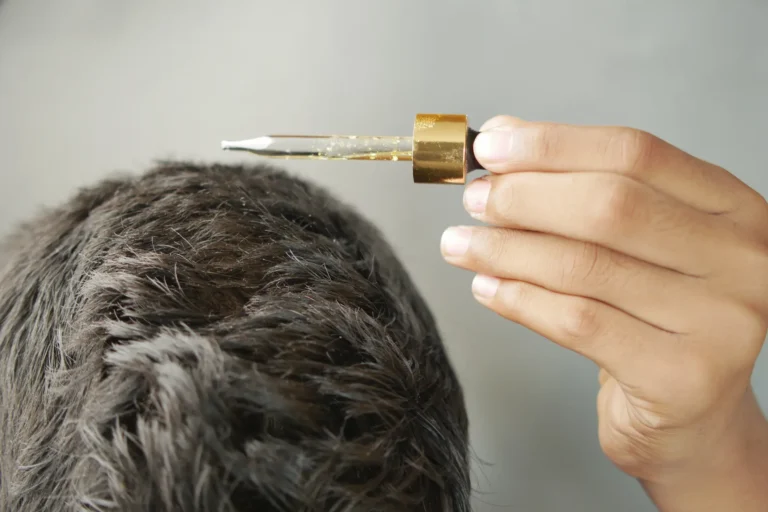
Prescription topicals (minoxidil to extend anagen phase), ketoconazole for scalp health optimization, and targeted supplementation based on labs — providing ongoing follicular support between PRP sessions. For patients on aggressive titration schedules with severe shedding, Dr. Shayma evaluates whether slowing dose escalation is appropriate — balancing hair loss against weight loss goals.
03
Significant weight loss can shift sex hormone levels — particularly in women. Dr. Shayma evaluates estradiol, testosterone, and thyroid function in GLP-1 patients with hair loss when the clinical picture suggests hormonal contributors. Trichoscopy at baseline and 3–6 months documents the shedding pattern and follicular recovery with objective data.
04
Significant weight loss can shift sex hormone levels — particularly in women. Dr. Shayma evaluates estradiol, testosterone, and thyroid function in GLP-1 patients with hair loss when the clinical picture suggests hormonal contributors beyond the telogen effluvium component.
GLP-1 Hair Loss Management at Millennium involves physician-supervised nutritional repletion, scalp PRP, and prescription topicals — all assessed for safety and appropriateness based on your clinical picture and GLP-1 therapy status.
GLP-1 Hair Loss Management at Millennium involves physician-supervised nutritional repletion, scalp PRP, and prescription topicals — all assessed for safety and appropriateness based on your clinical picture and GLP-1 therapy status.
An initial evaluation of your GLP-1 medication history, hair loss timeline, dietary intake, and nutritional labs — followed by a targeted nutritional repletion protocol, scalp PRP series, and ongoing monitoring. Most patients notice shedding reduction within 8–12 weeks.
Dr. Shayma does not recommend discontinuing GLP-1 therapy for hair loss in the vast majority of cases. The approach is proactive prevention and accelerated recovery — not cessation of an otherwise beneficial medication.
If you have noticed increased shedding, thinning, or reduced ponytail volume since starting Ozempic, Wegovy, Mounjaro, or Zepbound — this is a known, manageable complication that responds well to targeted intervention.
If you have noticed increased shedding, thinning, or reduced ponytail volume since starting Ozempic, Wegovy, Mounjaro, or Zepbound — this is a known, manageable complication that responds well to targeted intervention.
Dr. Shayma’s approach maintains GLP-1 treatment while proactively managing the hair loss through nutritional optimization, PRP, and the Scalp Solution — allowing you to continue benefiting from your weight management medication.
Managing GLP-1-associated hair loss requires expertise in both weight management medicine and scalp health. Millennium is one of the few practices in Northern Virginia where both are available from the same physician.
Dr. Shayma reviews your GLP-1 medication history, weight loss timeline, hair loss onset and pattern, dietary intake (especially protein), and any prior nutritional supplementation. A comprehensive nutritional and hormonal panel is ordered. Initial visit · 30–45 min.
01
Dr. Shayma reviews your GLP-1 medication history, weight loss timeline, hair loss onset and pattern, dietary intake (especially protein), and any prior nutritional supplementation. A comprehensive nutritional and hormonal panel is ordered. Initial visit · 30–45 min.
02
Based on your labs, Dr. Shayma prescribes targeted nutritional repletion — ferritin optimization, zinc, vitamin D, B12 as indicated — and provides specific protein optimization guidance for patients on GLP-1 therapy. Week 1–2.
03
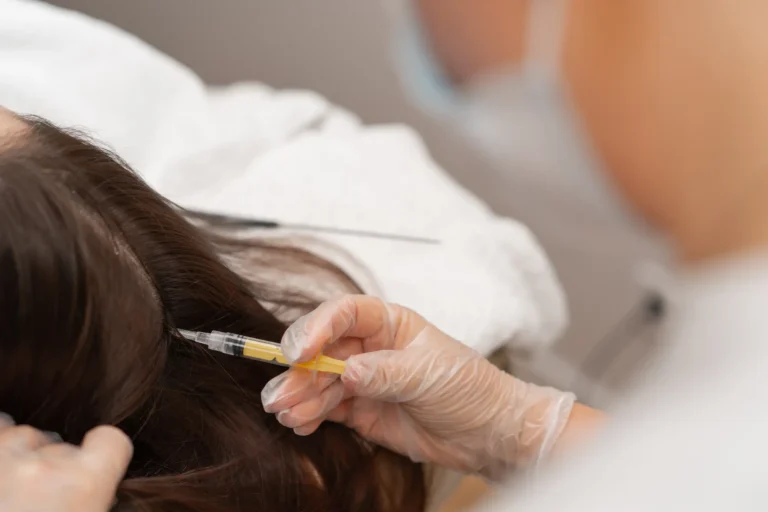
Three PRP sessions over 3 months to accelerate follicular re-entry into the growth phase. Combined with the Dr. Shayma Scalp Solution protocol for between-session maintenance. Dr. Shayma performs every injection. Month 1–3.
04
Trichoscopy at 3 and 6 months objectively documents follicular recovery. Labs confirm nutritional goals are met. If androgenetic alopecia is also contributing, ongoing treatment for AGA continues beyond the acute GLP-1 hair loss phase.
The four pillars of medical credibility — and why physician-led GLP-1 Hair Loss Management produces better outcomes than delegated or unmonitored alternatives.
Dr. Shayma manages GLP-1-associated hair loss from a uniquely integrated position: she prescribes and monitors GLP-1 medications for weight management, understands their metabolic effects at a clinical level, and provides scalp PRP and the Scalp Solution as integrated hair restoration — all within a single practice.
The management of GLP-1-associated hair loss requires expertise in nutritional medicine, telogen effluvium physiology, scalp PRP technique, and the pharmacology of GLP-1 receptor agonists. Dr. Shayma’s board-certified internist training and aesthetic medicine specialization together provide this intersection.
Millennium Medical Center is one of the few practices in Northern Virginia where GLP-1 prescribing and hair restoration are available from the same physician — eliminating the coordination gap that leads to suboptimal management of what is a predictable, manageable, and largely reversible complication.
Dr. Shayma does not recommend discontinuing GLP-1 therapy for hair loss in the vast majority of cases. The metabolic and cardiovascular benefits of effective GLP-1 therapy typically outweigh a reversible hair loss episode that can be actively managed.
The most common questions patients ask about hair loss from Ozempic, Wegovy, Mounjaro, and other GLP-1 medications.
Does Ozempic or semaglutide cause hair loss?
Yes — hair loss is a documented side effect of GLP-1 receptor agonists. The primary driver is the rapid weight loss the medication produces — which triggers telogen effluvium — rather than a direct toxic effect of the drug on hair follicles. Concurrent protein and nutritional deficiency from reduced food intake amplifies the shedding.
In most cases, yes. GLP-1-associated hair loss is largely telogen effluvium — a reversible shedding pattern that resolves as weight loss stabilizes and nutritional deficiencies are corrected. Hair typically begins recovering 3–6 months after the shedding peak. Scalp PRP significantly accelerates this recovery.
In most cases, no. GLP-1-associated hair loss is largely reversible and manageable without stopping the medication. The metabolic, cardiovascular, and weight management benefits of GLP-1 therapy typically outweigh a manageable, treatable hair loss episode.
The most important preventive steps are: ensure adequate protein intake (0.7–1g per pound of body weight daily), take a comprehensive nutritional supplement covering iron, zinc, vitamin D, biotin, and B12, and consider a baseline scalp PRP session before or early in GLP-1 therapy if you have a family history of hair loss.
Hair is made primarily of keratin — a protein. Most nutritional guidelines suggest 0.7–1g of protein per pound of body weight for patients on GLP-1 medications who want to preserve muscle mass and hair. Dr. Shayma provides specific, practical guidance on prioritizing protein sources that are palatable and achievable for GLP-1 patients.
Begin Your Journey
Whether you are coming in for internal medicine, aesthetic care, or to explore a physician-led treatment plan built around your health — Millennium Medical Center is ready to see you. Book your consultation today and experience care that starts from within.